

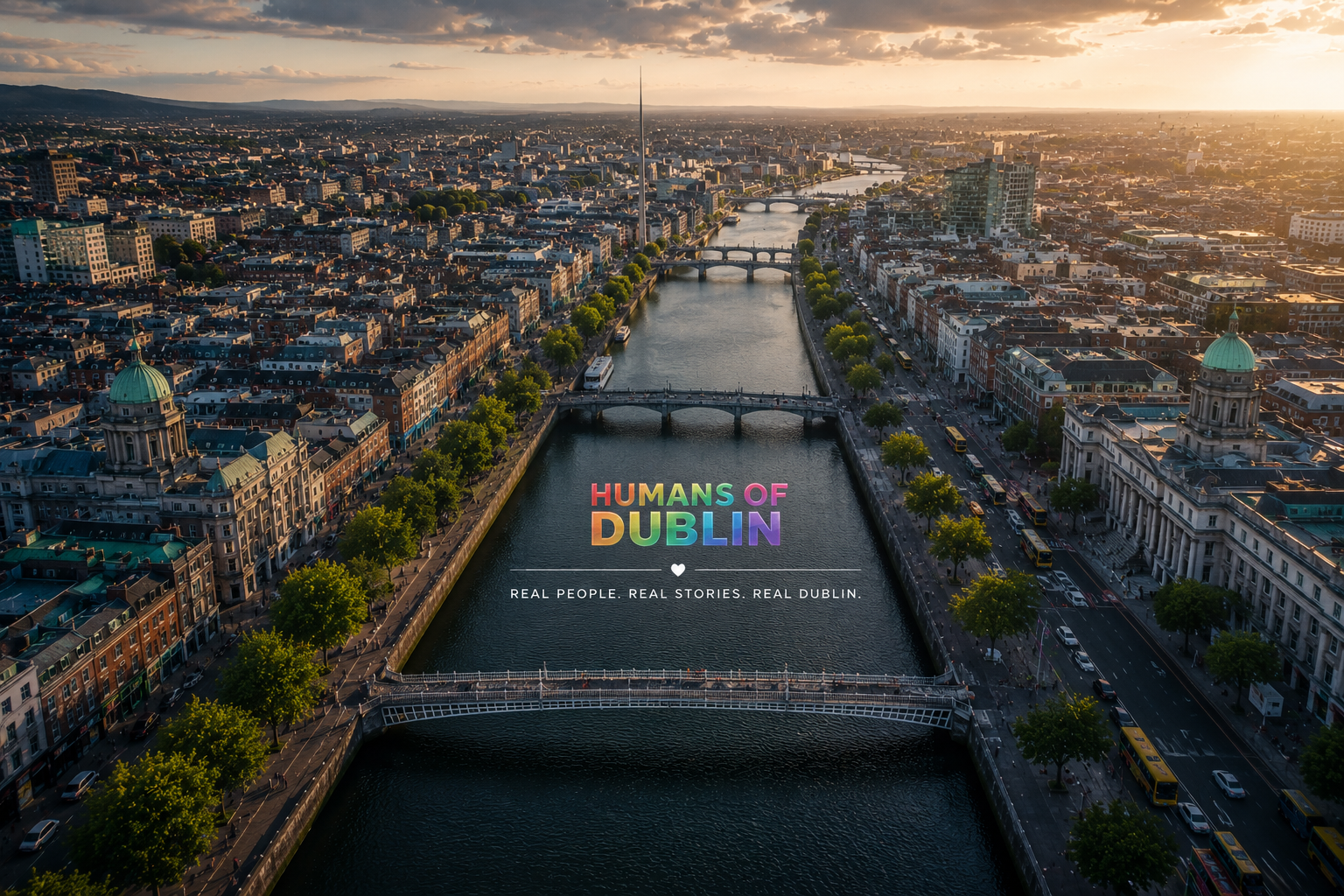
I met her on a Tuesday morning at the Forty Foot, which is not the kind of place I ever expected to meet anyone. I was there because my doctor had told me to “find something that wakes you up without breaking you,” after my wife left and I started living like a man waiting for a bus that would never come. The sea seemed honest. Cold, brutal, impossible to argue with.
She was already on the rocks when I arrived, sitting in a red swimming cap with a towel around her shoulders, looking out towards Dublin Bay as if she had misplaced something in the water. I remember her turning to me and saying, “If you hesitate, it gets worse.” I laughed because I thought she meant swimming. Later, I wondered if she meant everything.
Her name was Maeve. She was from Glasnevin, worked in a library, and had a way of speaking that made even ordinary things sound carefully chosen. I told her my name was Conor and that I was from Ringsend. I didn’t tell her I was lonely. Men my age have a hundred ways of saying that without using the word.
We went in together. The cold took the breath out of me so violently I nearly cursed in front of a group of pensioners. Maeve laughed, a full, bright laugh that bounced off the stone steps. When we climbed out, shivering and alive, she handed me half a flask of tea. It was too sweet, with far too much milk, but I drank it like medicine.
After that, I started going every Tuesday. I told myself it was for my health, but really it was for the ten minutes after the swim, when we stood wrapped in towels and spoke about nothing serious. She told me about books people returned with train tickets still inside. I told her about fixing engines at the garage near Pearse Street. She liked the small details of things. Once, when I said a car sounded “tired,” she smiled and said, “You listen to machines the way some people listen to people.”
By November, I had memorised the shape of her mornings. She took the DART to Sandycove, carried a blue bag with a broken zip, and always brought two towels, though she only needed one. The second, she admitted, was for anyone who forgot theirs. I thought that told me everything I needed to know about her.
One morning, rain came sideways across the rocks and everyone else had the good sense to stay away. Maeve arrived anyway, hair pinned badly, cheeks pink from the wind. We didn’t swim. We sat on the steps with coffee from a nearby café, watching the waves batter the wall. She asked me why I had started coming.
I gave her the polished version first. Health. Routine. Fresh air. She waited. So I told her the truth. I told her my marriage had ended quietly, almost politely, which somehow made it worse. I told her I had spent months eating toast for dinner and pretending the silence in my flat was peaceful. I told her I had forgotten how to be expected anywhere.
She didn’t offer advice. She just put her hand over mine for a moment, warm despite the weather, and said, “Being left doesn’t mean you weren’t worth staying for.”
I carried that sentence around Dublin for weeks. Through Dún Laoghaire, through wet evenings on the quays, through Christmas lights on Grafton Street. I began to feel something I was too old to call a crush and too frightened to call love. Whatever it was, it made me iron my shirts again.
In January, I asked her if she would have dinner with me. I did it badly, outside the changing shelters, holding one shoe and standing in one sock. She looked at me with such softness that I knew the answer before she spoke.
“I can’t,” she said. “Not because I don’t want to.”
She told me then that she was leaving Dublin in three weeks. Her sister in Galway was ill, and Maeve was moving west to help with the children. She had known for a while but hadn’t found a way to say it. I nodded like a man receiving instructions, but inside I felt foolishly young and hurt.
On her last Tuesday, the sky was clear and the sea was flat as glass. We swam without talking. Afterwards, she gave me her spare towel, the one she
Note: Please be aware that these are written in confidentiality and there is not reference or mention of any real people and their sentiments here. Every incident and Story tends to be emotional so please read at your own emotional risk. Website is not responsible for anything related. HumansofDublin.io is not related to the photography project HumansofDublin by Peter Varga